

Educational process guidance for Philippine microfinance and small lending desks — not legal advice. Talk to your bank and your counsel before you change how you accept, deposit, or follow up on dishonored checks.
A borrower hands over six post-dated checks at release. They go into an envelope, the envelope goes into a drawer, and three months later nobody is sure whether check number four was deposited, returned, or swapped for cash. A post-dated check register fixes that: one line per check, tied to the loan and the installment it pays, with a deposit date, a status, and a name beside every change.
The short answer: log every PDC the day you receive it, deposit on a fixed schedule from the register (not from memory), record the bank’s result the same day, and treat a returned check as a collections event with its own clock. Keep the register with the loan file so the officer, cashier, and branch manager all look at the same record.
This guide is for Philippine money lenders and small MFIs that still take PDCs for salary loans, business loans, and renewals. You will get the fields every row needs, a status lifecycle with who may change what, a decision framework for when to accept checks, refuse them, or switch a borrower to cash only, a daily deposit routine, a worked peso example, the traps that cause double collections, and a short FAQ.
Who this is for (and who can skip)
Use this if your desk accepts PDCs; if checks sit in a drawer or a vault box without a list; if you have ever deposited a check late, twice, or not at all; or if a resigning officer once left you an envelope nobody could explain.
Skip it if you collect only by cash, bank transfer, or e-wallet. You still need receipting discipline, which we cover in collection receipt discipline.
Why the drawer method fails
- Missed deposit dates. A check that should have gone in on the 15th goes in on the 28th, after the borrower’s account has already been drained by another creditor.
- Timing you can’t prove. Under the Bouncing Checks Law (Batas Pambansa Blg. 22), the presumption that the drawer knew funds were short applies to checks presented within 90 days of the date on the check, and the drawer has five banking days after receiving notice of dishonor to pay or arrange payment. If your desk cannot show when a check was deposited and when notice went out, you weaken your own position. Ask counsel how this applies to your files.
- Silent swaps. A borrower pays cash and asks for the check back. Without a register, nobody records that the check was released, so the installment looks paid twice or not at all.
- Custody gaps. When an officer resigns, their PDC envelope becomes a mystery. Our officer exit handover checklist is much shorter when the register already exists.
- No owner for the return. The return slip lands with the cashier, the borrower belongs to the officer, and the manager hears at month-end.
What the register should hold
This is the minimum set of fields we recommend. Every row is one physical check, never one loan.
| Field | Why it matters |
|---|---|
| Loan ID and installment number | Ties the check to a specific due date on the schedule |
| Drawer name, bank, branch, check number | Lets you find the check and match the bank’s return slip |
| Check date and amount (words and figures) | Must match the installment; flag any mismatch at intake |
| Account owner = borrower? | Third-party checks need a policy decision, not a shrug |
| Received by, received on, counted by | Starts the custody trail with two names |
| Planned deposit date | Set from the check date, not from when someone remembers |
| Status | One value from the lifecycle below, never free text |
| Deposit slip reference | Proves the presentment date |
| Return reason and notice date | Copied from the bank’s slip; starts the follow-up clock |
| Linked receipt number | Shows which payment settled the installment |
| Changed by, with a note | No status change without a name |

The status lifecycle (and who may change it)
A register only works if every check moves through the same short list of statuses, and if the person who books the loan is not the person who decides a check is “gone.” Use this as a starting point and adjust the roles to your branch.
| Status | Set by | Evidence on file | Allowed next |
|---|---|---|---|
| Received | Cashier | Intake list signed by borrower | In vault, Refused at intake |
| In vault | Cashier + second counter | Vault log count | Pulled for deposit, Released back |
| Pulled for deposit | Cashier | Morning pull list | Deposited, In vault (if run cancelled) |
| Deposited | Cashier | Deposit slip reference | Cleared, Returned |
| Cleared | Cashier, checked by manager | Bank confirmation + receipt | Closed |
| Returned | Cashier, same day | Bank return slip, reason, notice date | Settled by cash/transfer, Replaced, Redeposited, Escalated |
| Released back to borrower | Cashier with manager approval | Linked receipt + borrower acknowledgment | Closed |
Two rules make the table hold up. First, “Returned” and “Released back” always need a second person, the same maker-checker habit we describe for disbursements and repayments. Second, nothing ever moves straight from “In vault” to “Closed.” If a check disappears, that is an incident, not a status.
Decision framework: accept, refuse, or cash only
Officers need a rule they can apply at the counter without calling the manager every time. Write yours down. This is a practical baseline many PH desks start from:
- Accept PDCs when the account is in the borrower’s own name, every amount and date matches the amortization schedule you previewed before disbursing, and the checks are clean: signed, no erasures, words and figures agree.
- Refuse at intake when a check is altered, unsigned, has mismatched words and figures, is dated outside the loan term, or is drawn on a third party’s account and your written policy does not cover that. Refuse politely, ask for a replacement, and do not release until the set is complete.
- Accept with watch after one returned check that the borrower settled within the notice window. Keep the remaining PDCs, flag the account, and have the officer call two days before each next deposit.
- Cash or transfer only after a second return on the same loan, a return marked “account closed,” or a borrower who stops responding after notice. Pull the remaining checks from the deposit schedule. How you then hold or hand back those checks is a policy question for counsel; record whatever you decide on the loan file.
The point is consistency. Two officers in the same branch should never give the same borrower two different answers.
The daily routine, step by step
- Intake at release (5 minutes per loan). The cashier lists every check against the schedule. Amount, date, and payee must match. Any mismatch is fixed before cash leaves. The borrower signs the intake list, and a copy goes into the loan file document vault with scans of the checks.
- Store under dual control. Checks go into the vault with a second person signing the count, as in a dual-control vault log.
- Morning pull list. Each morning the register shows every check due for deposit today. The cashier pulls those and only those, and a second person confirms the count.
- Deposit and mark. After the bank run, mark each check as deposited with the deposit slip reference.
- Record the result. When the bank confirms clearing, post the repayment and link the receipt. When a check is returned, log the reason and the date you received notice before close of business.
- Weekly reconciliation. The branch manager counts physical checks in the vault against rows marked “In vault.” Any gap is investigated before Friday close, alongside your end-of-day float reconciliation.
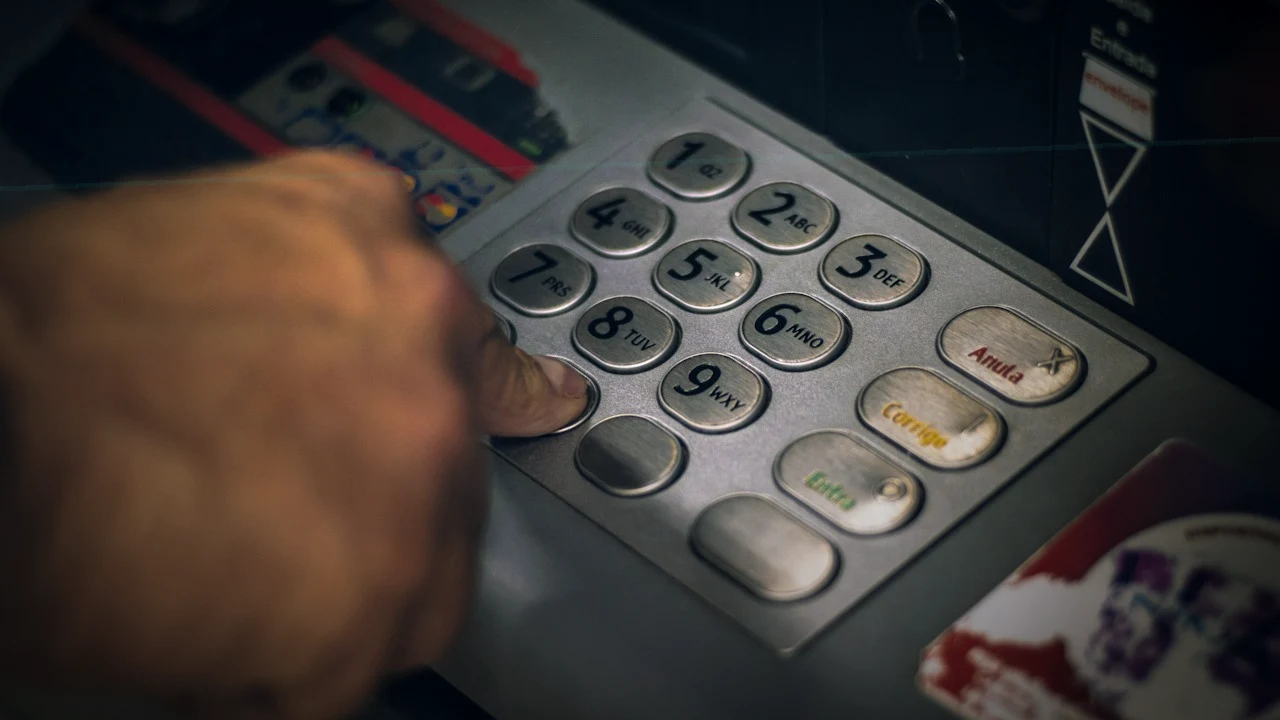
When a check comes back
Treat a returned check as its own collections task, not a footnote. Log the return, send the borrower a written notice the same day, and keep proof that it was received. Put the account on your promise-to-pay follow-up board with the date the notice was received, so everyone can see the window. Decide in your written policy, with counsel, whether you redeposit, ask for a replacement check, or require cash or transfer instead, and make sure every officer applies the same rule. Fees and penalties should follow your disclosed terms only; see late fees that are legal and clear. Do not threaten criminal action as a collection tactic; leave legal steps to counsel.
A worked peso example
Illustrative numbers only. A borrower takes a six-month loan with monthly installments of ₱5,500 (₱33,000 total) and hands over six PDCs dated the 15th of each month. Here is how the register reads at the end of the term:
| Check | Amount | What happened | Final status |
|---|---|---|---|
| #1 | ₱5,500 | Deposited on date, cleared | Cleared |
| #2 | ₱5,500 | Deposited on date, cleared | Cleared |
| #3 | ₱5,500 | Returned (insufficient funds). Notice received by borrower the next day. Borrower paid ₱5,500 cash plus the ₱250 returned-check fee disclosed in the contract three banking days later | Returned → Settled by cash |
| #4 | ₱5,500 | Written as ₱5,050 at intake; caught and replaced before release | Cleared |
| #5 | ₱5,500 | Borrower paid cash early and asked for the check back; released with manager approval and a signed acknowledgment | Released back |
| #6 | ₱5,500 | Officer called two days before deposit (watch rule); cleared | Cleared |
Total collected: ₱33,000 in installments plus the ₱250 disclosed fee, with six rows and six final statuses. Now replay it without a register. Check #4 is deposited for ₱5,050 and the account looks ₱450 short for months. Check #5 sits in the drawer after the cash payment, gets deposited on the 15th, and the borrower is collected ₱5,500 twice. That means a refund, a complaint, and an officer explaining a “system error” that was really a missing row. Multiply that across a branch with 200 active PDC loans.
Traps that break the register
- Depositing all checks at once “to be safe.” Post-dated checks presented early can be refused, and borrowers who planned around the dates will feel ambushed.
- Letting the officer who booked the loan also hold the checks.
- Releasing a check back without a linked receipt for whatever replaced it.
- Logging returns at month-end instead of the same day, which burns the follow-up window.
- Free-text statuses like “follow up” or “ok na” that nobody can filter.
- Keeping the register in a spreadsheet only one person can open, on one laptop.
- Skipping the weekly physical count because “nothing changed.”
Where PesoLend fits today
PesoLend does not have a separate PDC module, and you do not need one to run this well. What it gives you today is the loan record the register should sit beside: the repayment schedule each check is matched against, receipts for every posted payment, the loan-file document vault for check scans and borrower acknowledgments, loan notes for dated status changes, and staff roles and permissions with maker-checker on repayments so the person posting is not the person approving. Keep your branch-level register in a shared file, attach each loan’s intake list to its loan file, and reference receipt numbers in both places. Start with one branch, run the routine for a month, and compare late or missed deposits before and after.
Frequently asked questions
Should we still accept post-dated checks?
Many PH lenders do, especially for salaried borrowers. The register doesn’t make PDCs risk-free; it makes them visible.
How fast should a returned check be logged?
The same day you learn about it. The follow-up timeline starts from notice, so a late log costs you days you can’t get back.
Who should be allowed to release a check back to a borrower?
Only the cashier, with a manager’s approval, a linked receipt for whatever replaced it, and the borrower’s signed acknowledgment on the loan file.
Can we redeposit a returned check?
Sometimes, if the borrower confirms funds are in and your policy allows it. Record the redeposit as a new deposit date on the same row, never as a fresh row, so the history stays intact. Confirm the approach with your bank and counsel.
What about checks drawn on a spouse’s or employer’s account?
Treat third-party checks as a policy exception. If you accept them, document whose account it is and why, and have the account owner sign the intake list. Our guide on guarantors and co-makers covers keeping those relationships clean on file.
Next step: list every PDC you hold today against your active loans. Whatever doesn’t match is your first week of cleanup, and the register keeps it from coming back. Existing teams can log in to PesoLend to match each check to its schedule, receipts, and loan file.