

Most small lenders do not go broke from one bad loan. They go broke because personal money and lending capital share the same wallet. Rent comes out of the cash box. A cousin’s emergency comes out of the cash box. Then a good borrower shows up on payday wanting a ₱8,000 top-up and the desk is empty.
This guide is for Filipino one-desk lenders, market float operators, and side-hustle lenders who want a clean split: household cash on one side, working capital on the other. You will get peso and rough USD examples, a simple ₱50k float model, and a nightly close that takes under fifteen minutes. Soft note only: a focused LMS like PesoLend can hold the book so you are not guessing from texts. The habit still starts with you.
Why mixing money feels normal—and why it fails
When you start with ₱20,000–₱50,000 (~$350–$880) of your own savings, every peso feels personal. That is fair. The problem starts when personal life and the loan book keep spending from the same pile without a rule.
- Silent leak: You “borrow” ₱3,000 from the float for groceries, plan to return it Friday, then Friday is short.
- False profit: You take home ₱5,000 because collections were strong, forgetting ₱4,000 of that cash was scheduled for new disbursements Monday.
- Frozen desk: Three clean borrowers want renewals. You say no because the box is thin—not because risk is high.
Mixing is not a moral failure. It is a system failure. Fix the system and the guilt drops.

Define three buckets before you touch another peso
Write these on a card and tape it inside the cash box. Keep the names boring so you actually use them.
- Household: Food, utilities, school, personal ATM. Never funds a loan.
- Lending capital: Money that may leave the box as a disbursement. This is the only bucket that earns fee income.
- Ops reserve: SMS, transport, small officer stipend, ink, and a rainy-week buffer. Not for new loans.
Starter split for a ₱50,000 (~$880) desk:
- Lending capital: ₱40,000 (~$700)
- Ops reserve: ₱5,000 (~$88)
- Household transfer out: ₱5,000 (~$88) moved to a separate envelope or account the same day you fund the desk
If your total seed is only ₱20,000 (~$350), shrink proportionally: ₱16,000 capital, ₱2,000 ops, ₱2,000 household. Do not skip the household cut. Leaving “everything in the box for now” is how the box becomes the pantry.
Set a personal salary from the book, not a random pull
Owners who “take what is left” always take too early. Pick a fixed owner draw and stick to it for four weeks before you raise it.
Worked example:
- Active book: 25 loans averaging ₱8,000 outstanding → about ₱200,000 (~$3,500) outstanding principal
- Weekly collections (principal + fees): about ₱28,000 (~$490)
- Weekly new disbursements planned: ₱18,000 (~$315)
- Ops (SMS, jeep, snacks for collectors): ₱1,500 (~$26)
- Owner draw: ₱4,000 (~$70) every Saturday after the close
Cash left for capital rebuild: ₱28,000 − ₱18,000 − ₱1,500 − ₱4,000 = ₱4,500 (~$79). That surplus goes back into lending capital, not into a mall run. If the math cannot support a ₱4,000 draw, cut the draw—not the ops reserve. Hungry collectors miss visits.

Build a ₱50k float that actually turns
Float is not vanity. Float is the cash that lets you say yes to a clean renewal without waiting for a remittance.
Target float rule: keep liquid cash equal to one week of planned disbursements, or 15% of outstanding principal—whichever is higher for your desk.
For a ₱200,000 book planning ₱18,000 of disbursements next week:
- 15% of outstanding = ₱30,000
- One week of disbursements = ₱18,000
- Use the higher number: ₱30,000 (~$525) sitting as capital, not as “profit”
When float dips below the target for three days straight, pause discretionary top-ups and owner draw raises. Keep collecting. Keep recording. Resume disbursements when the float line recovers. This feels strict. It is cheaper than borrowing from a relative at awkward rates to fund your own clients.
Nightly close in fifteen minutes
Do this every operating day. Miss two nights and the week becomes fiction.
- Count physical cash in the lending capital envelope or box. Write the number.
- List today’s inflows: collections by borrower, with peso amounts.
- List today’s outflows: disbursements, refunds, ops spends from the ops reserve only.
- Reconcile: yesterday’s capital + inflows − disbursements − any capital→ops transfers = today’s capital count.
- Flag gaps over ₱200 (~$3.50). Gaps that small still matter; they teach the habit before a ₱5,000 hole appears.
If you use paper, one page per day is enough. If you use software, the same five steps still apply—you are just faster. See PesoLend pricing when you are ready to stop rebuilding the same sheet every Monday.
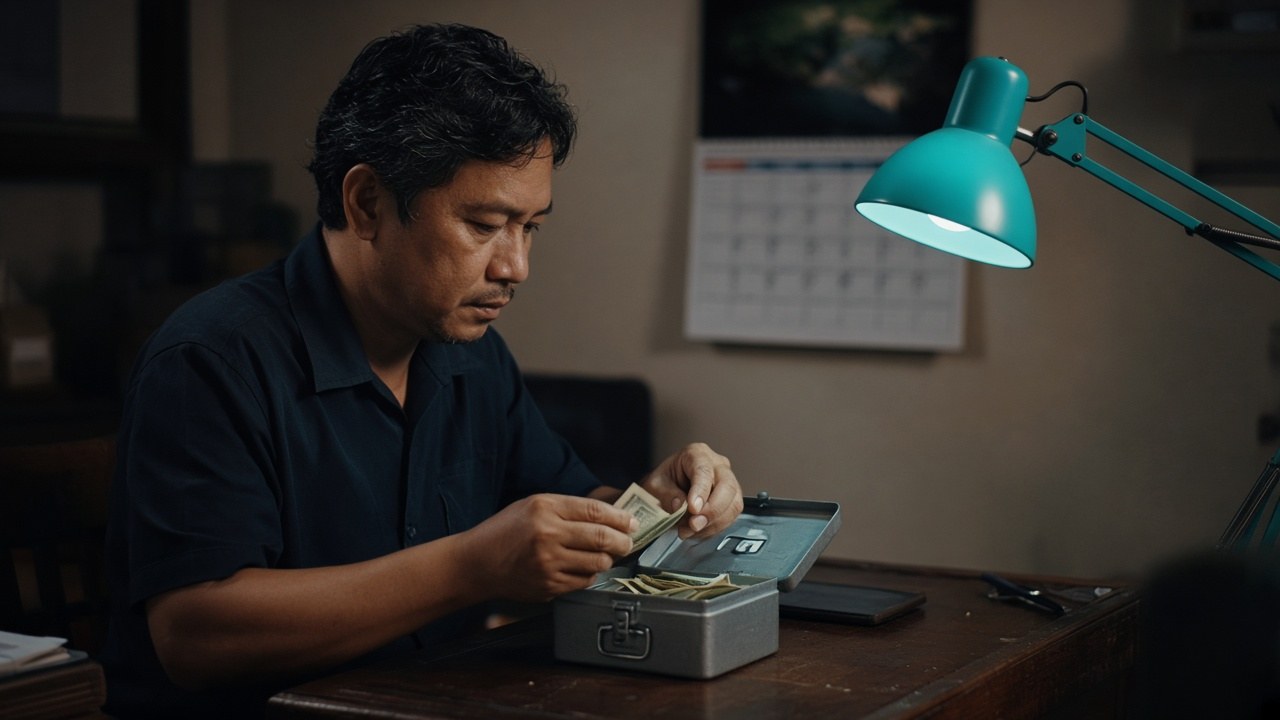
Rules for “borrowing” from your own float
Life happens. School fees land. A pipe bursts. Write the exception before you need it.
- Hard cap: never pull more than 10% of lending capital for personal use in a calendar month.
- Written IOU to yourself: date, amount, repay-by date within 14 days, and which income will refill it (owner draw, side job, spouse transfer).
- No silent pulls: if it is not on the daily close page, it did not happen—until the count fails.
- Second miss = freeze: if you miss the repay-by date once, freeze personal pulls for 30 days.
Example: You pull ₱4,000 from a ₱40,000 capital stack on Tuesday for a medical bill. You schedule ₱2,000 from Saturday’s owner draw and ₱2,000 from a freelance payment next Wednesday. Both dates go on the close page. Until both land, treat float as short and delay one non-urgent disbursement if needed.
Separate accounts without fancy banking
You do not need a corporate setup on day one. You need friction between buckets.
- Two e-wallets or two bank accounts: one named for household, one for lending. Rename them in the app so the choice is obvious at 10 p.m.
- Physical envelopes still work for cash-heavy desks. Color-code: cream for household, teal or navy for capital.
- One weekly transfer day: move the owner draw to household only on Saturdays. Midweek “just this once” is how the rule dies.
When a borrower pays into your personal GCash by mistake, transfer to the lending wallet the same hour and note it. Do not “leave it” and hope you remember.
What to track so money arguments stop
Partners and spouses argue about lending money when the numbers are foggy. Share three numbers weekly, not a speech.
- Lending capital cash on hand
- Outstanding principal (sum of unpaid balances)
- Owner draw taken this week
Optional fourth: number of accounts past due by 7+ days. That one explains why capital feels tight even when collections looked busy.
Keep the conversation to fifteen minutes. If capital is up and past-dues are flat, celebrate briefly and stop. If capital is down, look at draws and disbursements before you blame borrowers.
When the book is ready for software
Spreadsheets are fine for ten accounts. At twenty-five active loans, phone notes start lying. You want every disbursement, due date, and payment tied to a person—not a heroic memory.
A Philippine-focused stack should make the nightly close boring: open the day, post payments, see capital move, lock the day. If you want that path, start at PesoLend login after you skim features and pricing. The product does not replace your float rule. It makes the rule visible.
A 30-day money-hygiene plan
Do not overhaul everything tonight. Run this month in order.
- Days 1–3: Label three buckets. Move household cash out of the lending box.
- Days 4–10: Nightly close without fail. Fix gaps over ₱200 the next morning.
- Days 11–20: Set owner draw. Refuse midweek personal pulls unless the written IOU rule is followed.
- Days 21–30: Hit float target (one week of disbursements or 15% of outstanding). Only then raise draw or ticket sizes.
By day 30 you should know, without opening a chat thread, how much you can safely lend tomorrow. That clarity is worth more than one extra fee this week.
Common traps to skip
- Calling collections “profit.” Most of that cash is principal returning to capital.
- Paying personal debt from the float with no repay plan. That is a second loan book with one borrower: you.
- Growing ticket size before float is stable. Bigger loans magnify a thin box.
- Hiding the owner draw. If your household does not know the number, the household will invent one.
Bottom line
Separate personal money from lending capital on purpose. Fund a float that can say yes to clean renewals. Pay yourself on a schedule. Close the box every night. Do those four things and a ₱50k desk can grow without eating the household—or freezing when good borrowers walk in.
When you want the ledger, dues, and payments in one place so the nightly close stays short, look at features, check pricing, and try the app at login. Keep the float rule either way. Software helps. Discipline decides.